
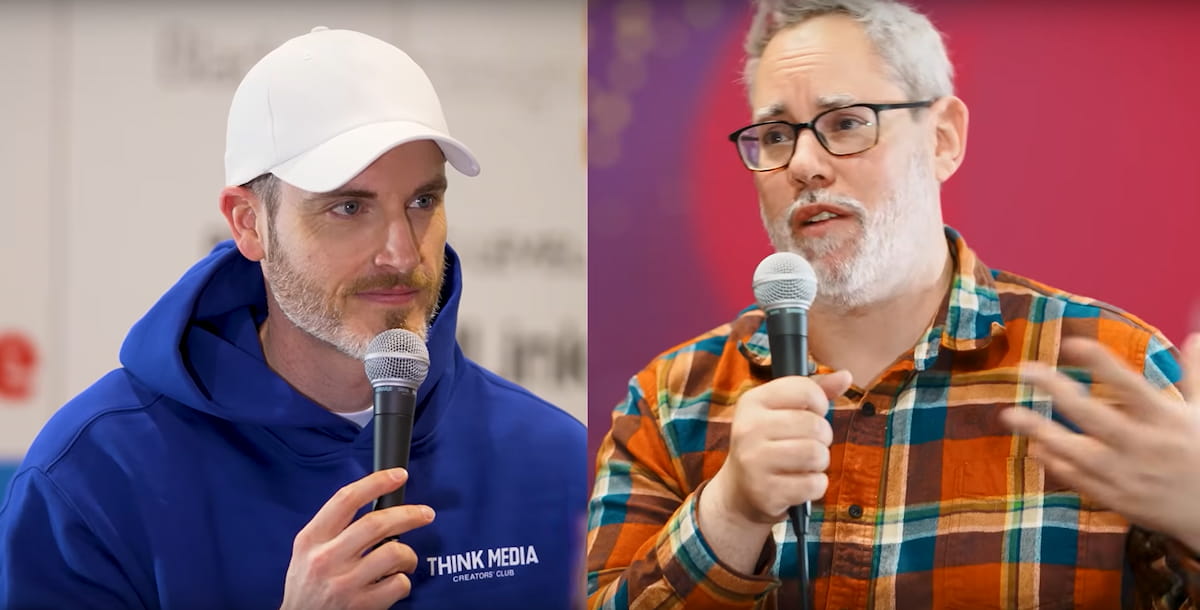
On YouTube, I came across a video (because it was displayed right at the top of my feed) titled: “YouTube Employee Reveals the Real Reason You’re Not Getting Views“, listened to it, and based on my experience as a YouTube user and creator (for over a decade) I can confirm it’s mostly a PR stunt, with some correct info just to give it credibility. It is over 30 minutes long, but this is what’s true, followed by what’s PR gaslighting:
🎯 Real takeaways (what they won’t tell you directly)
1. The algorithm changes constantly – but creators are blamed for it
YouTube wants creators to believe, “Your videos didn’t get worse – you just didn’t adapt” (implying that they did get worse) – but the real story? Platform rules shift without notice, and those not fitting the preferred formats or watch patterns get buried.
2. LLMs are used to lock creators into “CONTENT BOXES”
1:58:
“YouTube is using LLMs… we can now understand more parts of a video… Before, maybe YouTube knew how to follow a recipe, now it’s better at cooking.”“…Maybe we’re recommending generic dance videos and you’re not interested in those now we understand you like salsa we’re giving you salsa videos…”
Your video is now analysed not just for topics but structure, tone, and NICHE. If one salsa video blows up, expect the algorithm to ignore your tango video tomorrow – because now you’re “the salsa person.”
3. Shorts views are inflated – real engagement is separate
12:45:
“So what we’re doing now is if your video shows up in the feed that counts as a view. We’re keeping the old view metric now and we’re calling them ‘Engaged views’…”
A “View” now means just appearing in someone’s shorts feed (on a smartphone. Real performance? That’s measured in “Engaged views.”
Analytics -> Content in YouTube studio.
So yes, you might get 100K views – but YouTube knows if 99% swiped past in 0.2 seconds, and that will affect your channel’s future visibility.
4. If you don’t design bingeable ‘content’ journeys, you’re done
One video must lead into the next – session time and predictable viewing are the new gods. Channels that jump between unrelated topics are punished, no matter how good the videos are (“dance, monkey!”).
5. The tools they give you are shallow – the real levers are hidden
YouTube pushes “inspiration” and “similar audiences” tools. These are keyword suggestion engines – not insight into how discovery really works. The hard data is kept under lock and NDA.
6. Yes, they do boost small creators – but only to test engagement
14:32:
“…Taking one or two slots at the top of recommendations and finding channels that we think the viewer will be interested in that are either like like low views and low subscriber channels just to sort of help them find an audience faster uh we want to still make sure they’re good recommendations…”
A few low-sub creators are temporarily elevated. If they don’t perform fast enough? Gone. YouTube admits this is experimental – not merit-based, and not sustainable.
🧠 The gaslighting explained
The entire interview is a carefully crafted PR script designed to shift responsibility onto creators while masking how little control they (the creators) actually have.
Let’s discuss the tactics used:
“We didn’t change the algorithm – maybe your content just isn’t working”
They love to use the term “content” for videos – it strips creativity into metrics and marketing.
At 1:05:
“My content is not performing the same – the algorithm must have changed – is like a blanket statement. That’s not always true…”
🚩 Lie of omission: YouTube did change ranking signals. Heavily. Shorts now dominate. Niche-locking is tighter. Long-form has less organic reach unless it chains viewers through sessions.
✅ Reality: Creators are punished for experimenting – even slightly – unless it fits their “expected pattern.”
See: YouTube is working as intended
“We want the audience to decide – not us”
🚩 False framing: The algorithm is the audience filter. If the audience doesn’t see your video, they can’t decide anything.
✅ Reality: Discovery is heavily influenced by click-through rate, session time, niche matching, and platform priorities (e.g. Shorts). You’re shown if you’re in the preferred format. This is not neutral.
See: YouTube eats your time and your comments
“We use AI to better match content to viewers”
🚩 PR twist: They call it “precision,” but it’s really about algorithmic boxing. Once you’re categorised, you’re stuck there unless your metrics are exceptional.
✅ Reality: Creators are now punished for novelty or experimentation. Deviate from the expected format and you vanish.
See: The algorithm owns the means of production
“The tools are here to help you grow”
🚩 Half-truth: Tools like “inspiration” generate generic suggestions and “high/medium/low” view predictions – based on opaque data and safe bets.
✅ Reality: These tools don’t reflect internal recommendation models, and they reinforce status-quo content formats.
“We’re just here to support creators”
🚩 Tone-policing with a smile: Reassuring words mask a hostile environment where creators are penalised for honesty, inconsistency, or nuance.
✅ Reality: If your videos aren’t advertiser-safe, bingeable, or trend-aligned – they’re throttled. No amount of “passion” fixes that.
See: What killed the open Internet?
🚨 This is not advice – it’s narrative control
YouTube’s strategy is simple:
- Shift blame to creators.
- Obscure how discovery is actually shaped.
- Promote adaptability without disclosing what to adapt to.
- Offer shallow tools to maintain the illusion of support.
They gave us a toy steering wheel, while driving the car themselves – but want to convince us that we (as both creators and viewers) are in control.
Last updated:
Originally published:
