
Affordable housing vs concentration camps:
whether increased productivity is good or bad, depends on what it’s used for.
In separate articles, I’ve discussed:
“Is AI theft?“, Internet privatization and effective censorship, and how that affects YouTube as one (huge) platform in particular (among many others).
Update: I also wrote about how this is all normal and expected in capitalism, referencing Marx’s analysis in the context of YouTube’s treatment of creators.
1. AI is a tool
If we cut through sensationalism and fear-mongering, it is clear that AI is a tool. Every tool can be used for either good or bad. A tool has no moral alignment, no ethical compass, and no agenda.
However, tools that are more powerful, demand greater care and ethical responsibility from those who use them. For example, here’s a short list of tools that differ in terms of their power, and the needed responsibility and caution when using them:
- hammer (a tool in the narrow sense of the word – that still lets you bust your fingers if not careful 🙂 )
- rifle (a weapon – that can be used for protecting or harming people)
- atomic energy (a source of energy or a source of destruction)
Where does AI fit in that list? Before answering that, we must note that AI is being constantly improved. It’s not a blunt object or a firearm – but like atomic energy, it can be harnessed for great benefit or misused with devastating consequences. Today, it is already quite powerful, but further improvement will require caution and care – i.e. treating it like a very powerful tool (which can be very destructive if not kept in check).
Now, let’s look into two different aspects related to AI:
2. Keeping it in check?
In January 2022, almost a year before ChatGPT came out, I wrote a dystopian sci-fi story on this topic. But I missed an important aspect: AI doesn’t need to be self-aware to harm us!
Fire, water, and even nuclear energy are not self conscious – yet they can very much harm us whenever they get out of control. In a similar way, AI can just follow its program and basically do as instructed while harming us severely.
In fact, the danger can come precisely from AI not being self-aware – it won’t understand it’s causing harm. It’ll just keep going, exactly as instructed, quickly and efficiently.
And we’re the ones doing the telling – often without fully understanding what we’ve built.
In the U.S. and UK, automated decision-making has denied people housing, benefits, and healthcare – not out of malice, but because algorithms were designed to cut costs. Financial markets have suffered “flash crashes” caused by AI-driven trading systems acting faster than humans can react.
Now imagine that logic applied to policing, border control, or warfare.
A common mindset today is: “Just get it to work.”
Even if you don’t fully understand how.
But building a powerful system, letting it run critical parts of our lives, and not being 100% sure how it functions – that’s not control. That’s gambling.
A single flaw or edge case could make it behave in ways you never intended.
It’s not a matter of “if,” but of “when” and “how”!
I wrote about this mindset too: Zeitgeist: “Fake it ’till you make it!”
Now, let us consider how it is used, even when we are in control:
3. Using it right?
Tools and energy can be used to help or to enslave and destroy people. The same goes for the AI – a tool that is getting more and more powerful as you’re reading this.
Under capitalism, any tool that increases productivity is used to cut down on the number of employed workers – not to reduce the working hours of the existing workers (with, God forbid, them keeping the same income).
AI is just a very universal tool that can drastically increase productivity in many jobs that required more intellect, not just the manual jobs that were replaced by the more conventional factory robots.
When you have many workers replaced, owners (capitalists, huge corporations) have a very good bargaining position: you work for a low pay, in poor conditions, or we find someone else and you starve. That’s what it boils down to.
The system we live in encourages and nourishes some of the most shortsighted and selfish sides of human nature – and it oppresses the other, more noble impulses. We are not trying to build things that last, truly preserve the environment and lift people out of ignorance and poverty. That’s the rhetoric, but what’s actually being done is the opposite.
Yes, AI has brought some real benefits – medical diagnostics, accessibility tools, language translation, even scientific breakthroughs. That part is not the problem – the problem is it’s not limited to bringing good, but often (deliberately) abused.
With AI and other productivity tools: instead of gaining more free time to do science, art, or leisure, we are struggling to keep the very few jobs (often obviously pointless) just to avoid being homeless.
It’s like handing someone a hammer – and instead of using it to replace your bike’s worn bearings, they smash your bike frame so you’re forced to buy a new one.
To make things worse, AI is also being used to expand surveillance, enforce automated decisions (like rejecting your loan application), and drive behavioural control through algorithms.
Meanwhile, mass-produced entertainment distracts us – and instant AI answers are eroding our ability to think critically.
Education is also threatened by excessive reliance on AI for homework.
Productivity has never been higher.
But whose needs is it serving?
4. What should we do?
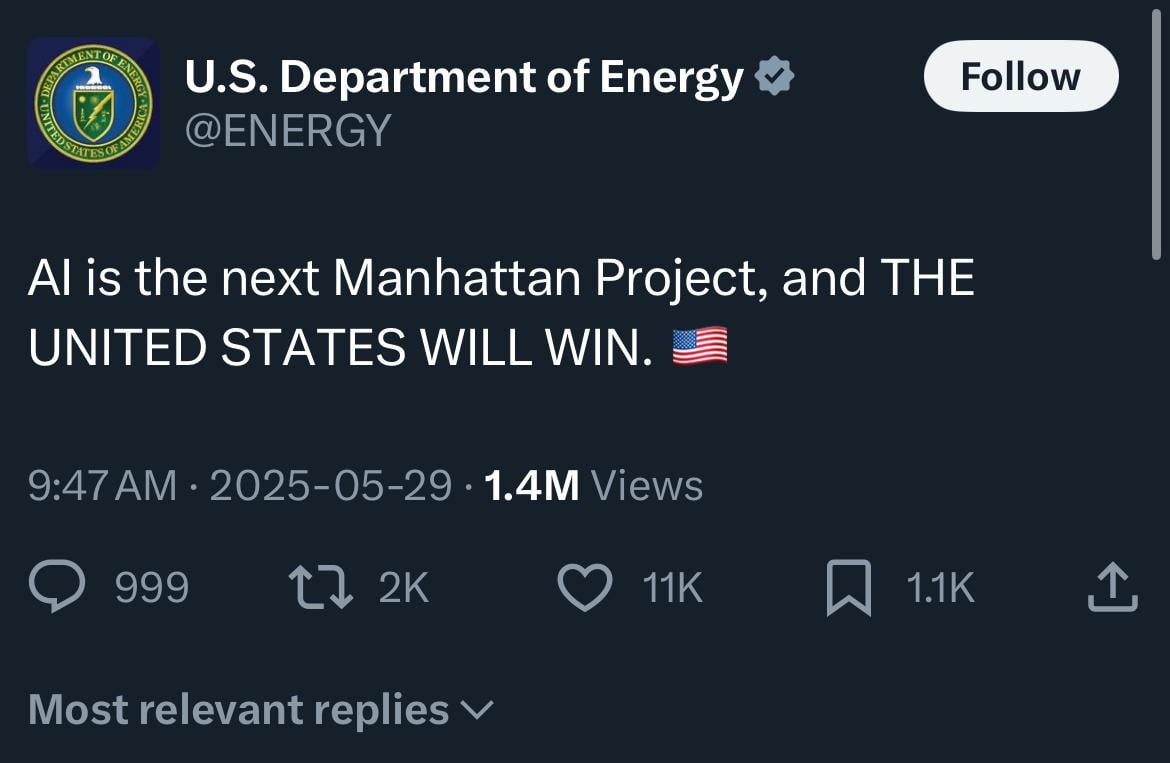
Currently, AI development looks like the nuclear arms race: no one wants to be left behind out of fear of getting overwhelmed (and, just like the nuclear arms race, it was started by the US 🙂 ).
We built machines to free ourselves – and ended up tightening the cage.
That is the free housing vs concentration camps dilemma from the start.
There’s no stopping it.
And no bringing it under control – not without a level of global cooperation that simply isn’t realistic.
What 100% won’t work:
- “Ethical AI” as proposed by corporations (mostly a smokescreen).
- Government regulation that doesn’t challenge capitalist incentives (profit-driven decision making).
- Hoping that “market competition” will self-correct misuse (nonsense that may require a separate article for some readers to truly understand).
What also won’t work: 🙂
As individuals, or even as organised groups, we’re powerless to stop this tide.
That’s not pessimism. That’s reality. Pretending otherwise is wishful thinking – and that won’t help us.
Changing the system – from soul-crushing, planet-burning capitalism to something humane – would require enormous sacrifice.
Not just from us, but from our children. Maybe even our grandchildren.
And for what? A better world they might never get to see themselves – only build for others.
That’s a lot to ask. Maybe too much.
But right now, I don’t see another way. If there is a better future, it has to be built on a global scale – or not at all.
The alternative is to try and survive as best as you can – within your means and your ethics (not everyone is ruthless and soulless enough to thrive in modern capitalism). Do the best you can while being able to sleep well at night, I suppose.
Even if we can’t stop the machine, we can still choose how we live, who we stand with, and what we refuse to become. Document what’s happening. Help others where you can. And don’t let this system make you forget how to be human.
If only there were a system that didn’t put money and private ownership above all else? Hmm… that sounds like the one most folks have been brainwashed into hating and (blindly) believing it “doesn’t work in practice” (despite historical examples that suggest otherwise – Hakim’s video link).
References
- Tweet by the US Department of Energy (their official website link):
https://x.com/ENERGY/status/1928085878561272223 - “Socialism always fails” is a stupid argument (video by Hakim):
https://www.youtube.com/watch?v=nFUC0UWgdGY
P.S. Submission status
I submitted this article to Monthly Review Online (MR Online), thinking it might be a good contribution.
It was rejected:
“Dear Relja,
Thank you for your submission to MR Online. We regret that we are unable to accept it for publication, but wish you the best of luck placing it elsewhere.
Sincerely,
[Name redacted]
MR Online”
Last updated:
Originally published:
